

The New Ultra-Long-Range Race
How Dassault, Gulfstream and Bombardier are redrawing the map for long-range private jet travel.
By Robert Stedman

Somewhere over the vast and empty middle of the Pacific, hours beyond the last diversion airport worth noting, a passenger aboard an ultra-long-range business jet does something almost unremarkable: asks for a second helping of dinner, reclines a few more degrees, and goes to sleep. A decade ago, this exact routing — Hong Kong to New York, nonstop, with a full cabin — simply didn’t exist. In those days, it meant a technical stop in Anchorage, a queue at a fuel depot, an hour or more lost to a runway nobody wanted to be on. Now the stop has been engineered out of the trip entirely, buried in wing design, fuselage and fuel-tank geometry rather than in any single headline moment.
That quiet disappearance of the fuel stop is the real story behind the current technology race among the world’s three top business jet makers, and it has nothing to do with price. It is distance — specifically, how many nautical miles separate the world’s most demanding city pairs, and whether an aircraft can close that gap in one leg.
Closing the gap
For decades, “long range” in private aviation meant transatlantic — New York to London, easily, with fuel to spare. The latest benchmark is harder: Hong Kong to New York. Singapore to London. Sydney to Los Angeles. These are missions that chew through nine, 10 or 11 hours of flying, often against headwinds and carrying a full cabin of passengers and their baggage. Closing that gap has become the defining contest in business aviation.
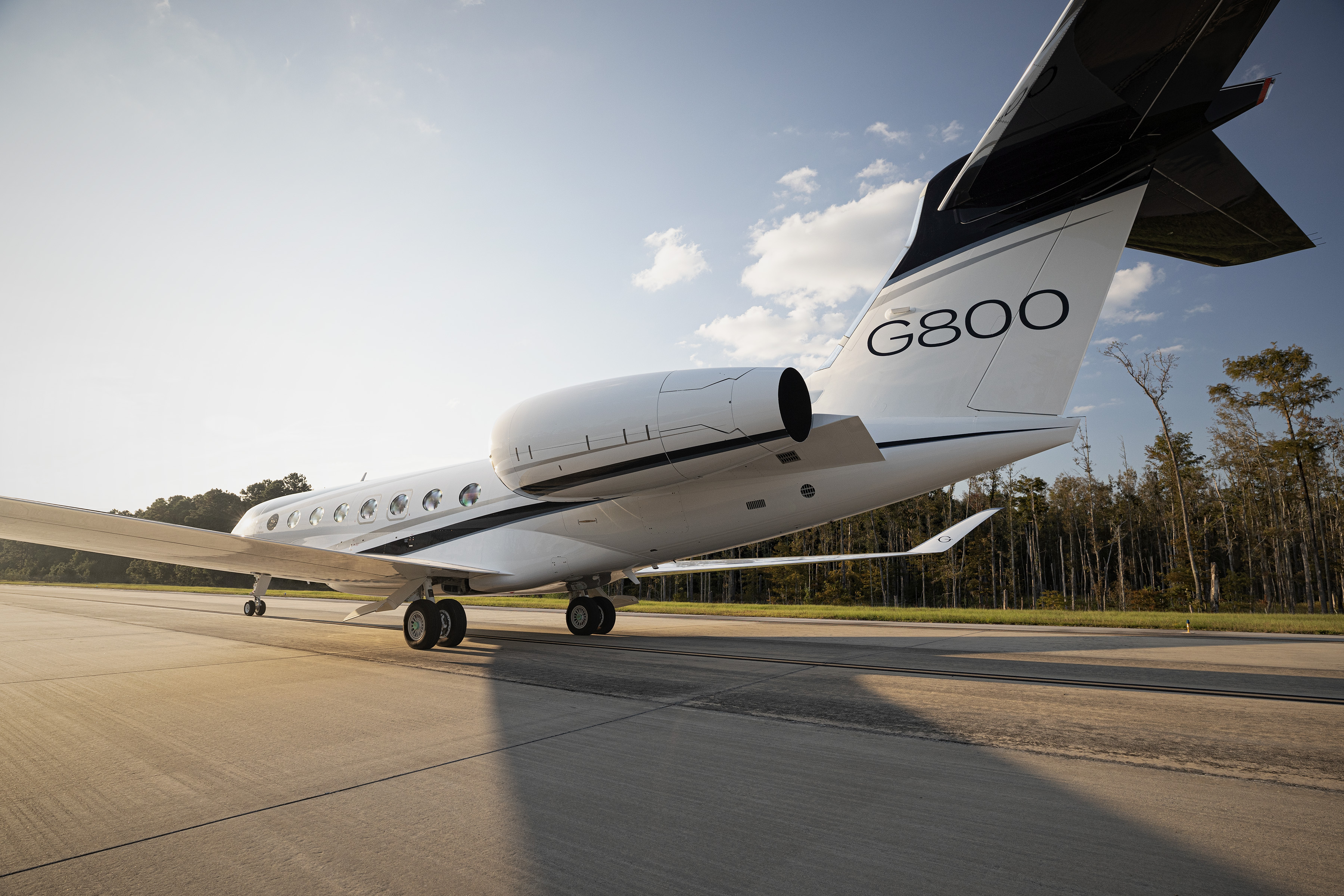
Gulfstream holds the outright range record with the G800, rated at 8,200 nautical miles — enough, on paper, to link Hong Kong and New York without a fuel stop. Bombardier’s Global 8000 sits close behind at 8,000 nautical miles, but counters with the fastest cruise speed in the category — Mach 0.94, edging towards numbers not seen since Concorde retired.
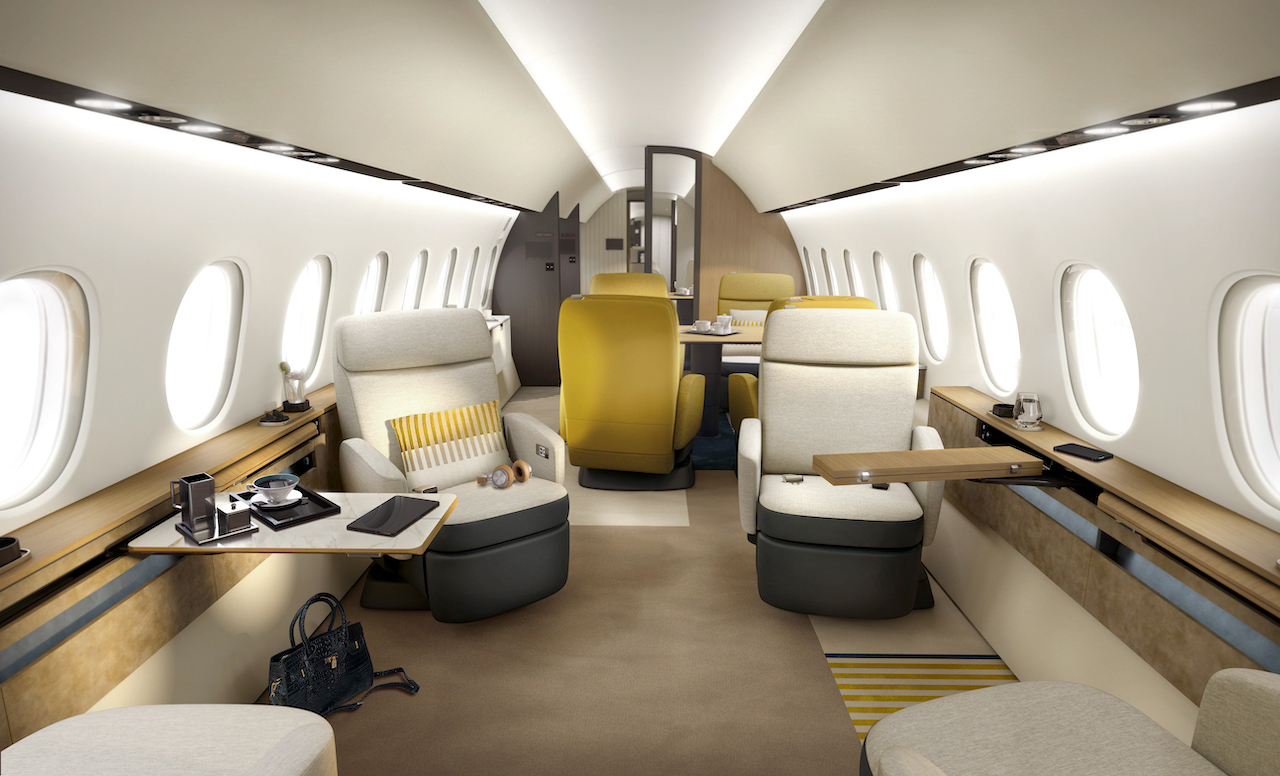
Dassault has taken a different tack. Its Falcon 10X, still working towards certification, trails on outright range, sitting in the mid-7,000-nautical-mile class, but offers the widest, tallest cabin of any purpose-built business jet on the market. Each maker is solving the same problem by choosing a different priority.
The trade-off nobody advertises
Range, in an aeroplane, is bought with fuel. Fuel is weight. And weight is the one currency every cabin designer must eventually spend from the same account as legroom, galley size, crew rest, and baggage capacity. An aircraft built to squeeze every last nautical mile out of a wing tends to come with a narrower fuselage and a smaller interior. An aircraft built around cabin volume generally accepts a shorter reach.
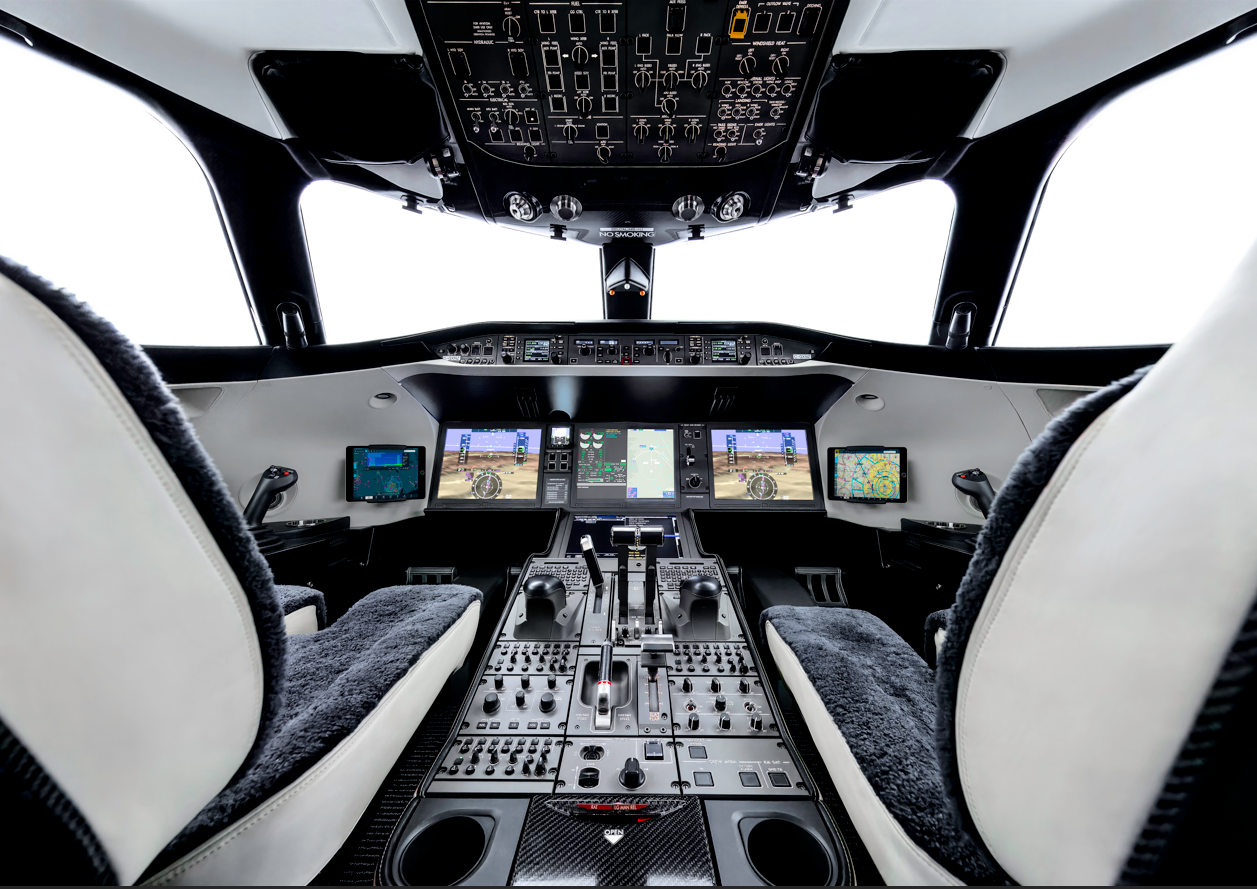
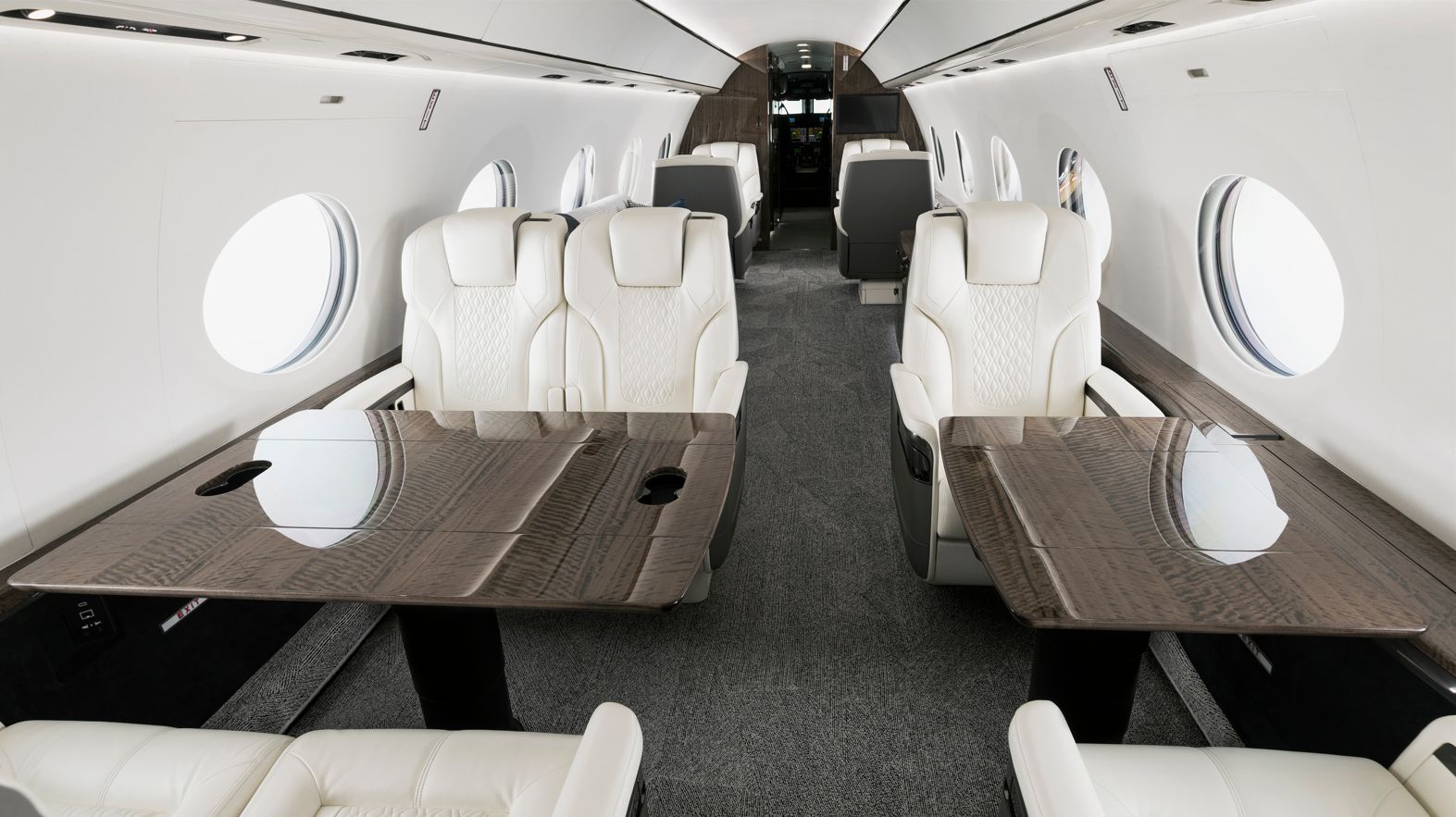
Gulfstream and Bombardier have leaned toward range and speed. The G800 pairs its distance record with an unusually low cabin altitude at cruise — engineers have pushed hard on pressurisation, which matters enormously on a 12-hour sector when jet lag is the real enemy. Bombardier’s Global 8000 leans on its Nuage seating system, designed to flex and recline in ways that mimic movement rather than rigid support, across a four-zone layout built for work, dining, and sleep in sequence.
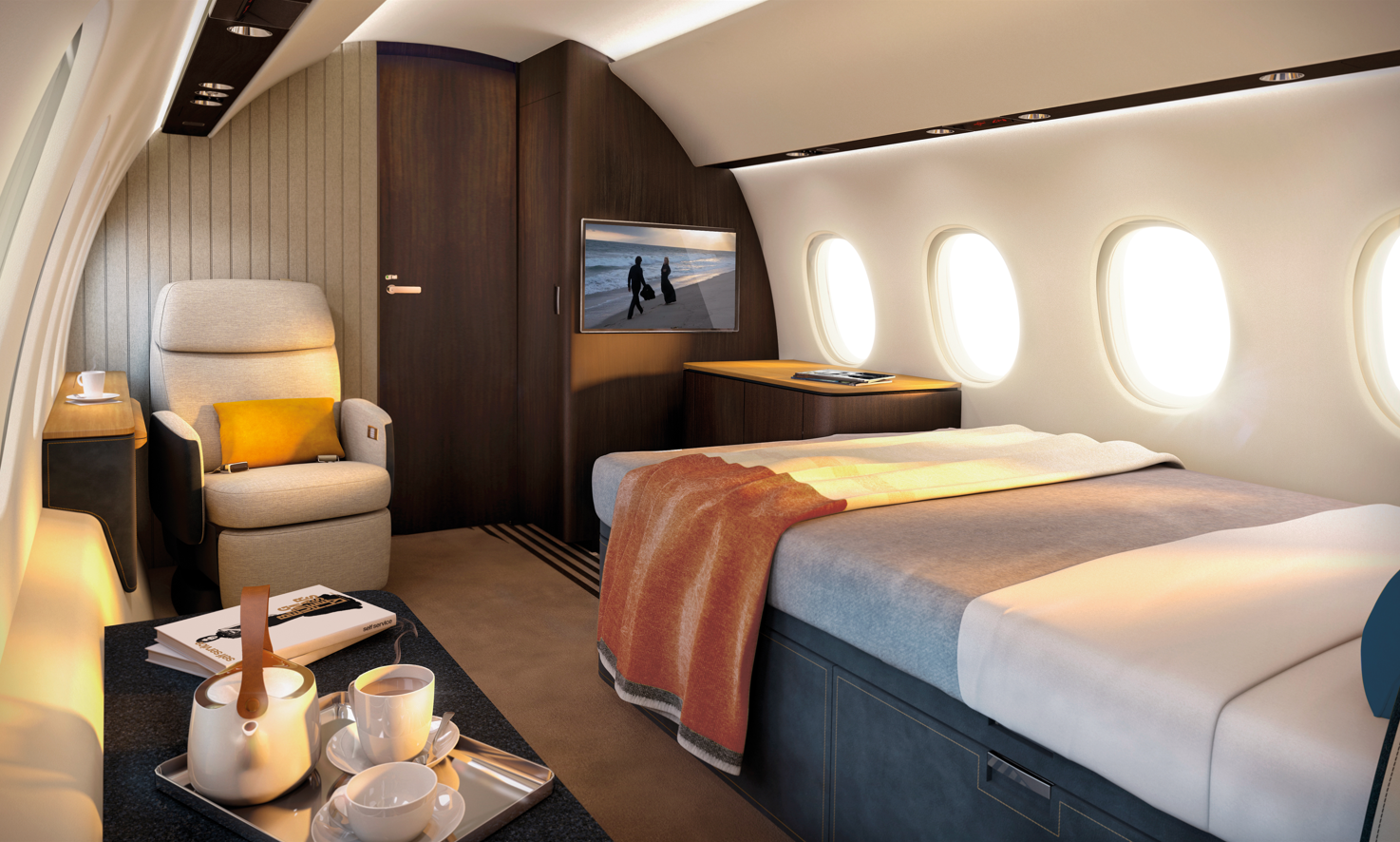
Dassault has bet the other way. The Falcon 10X’s cabin is nearly a foot wider than those of its rivals, enough to genuinely change what a “bedroom suite” or “walk-around shower” means at altitude. Its fly-by-wire flight controls — drawing on Dassault’s fighter-jet heritage with the Rafale — free up cockpit space and, the company argues, smooth the ride enough that the extra volume matters more than it would otherwise. The 10X also delivers a shorter take-off distance than either American rival, opening runways the heavier aircraft cannot use and reframing “range” as accessibility as much as distance.
What this means for the routes that matter
Sydney to London remains the industry’s white whale — a genuine nonstop would require closing roughly 9,200 nautical miles, still beyond any of these three aircraft with a full cabin. However, Singapore to London, at under 6,000 nautical miles, sits comfortably within reach; Hong Kong to New York and Sydney to Los Angeles now sit inside the envelope of the category leaders. For operators based in Singapore and Hong Kong, itineraries that once demanded a technical stop in Anchorage or the Gulf can increasingly be flown straight through.
None of the three manufacturers will say so plainly, but the subtext of this race is that “ultra-long-range” is no longer really about the outer edge of what is technically possible. It is about which trade-off a buyer is willing to live with for 10 or 12 hours at a time: the extra reach and speed that get you there fastest, or the extra room that makes the getting there disappear. Increasingly, in the world’s most rarefied hangars, that choice is the only decision left to make.
___
Photos: Dassault, Gulfstream, Bombardier

Engineering Wellness At 39,000 Feet