

Falcon 10X: Fusing Comfort and Fighter-Inspired Capabilities
A business jet rollout is as much a milestone as a messaging opportunity.
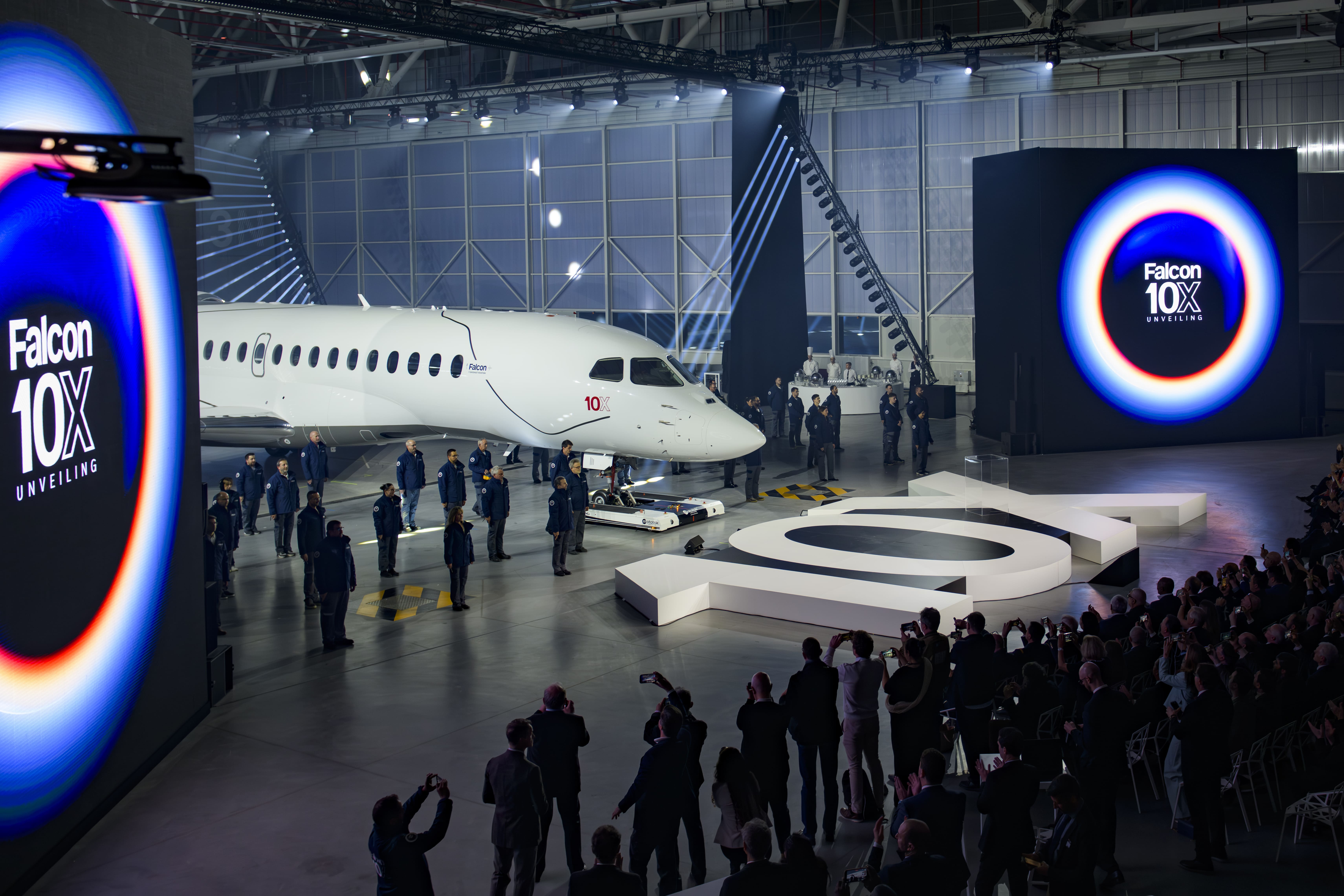
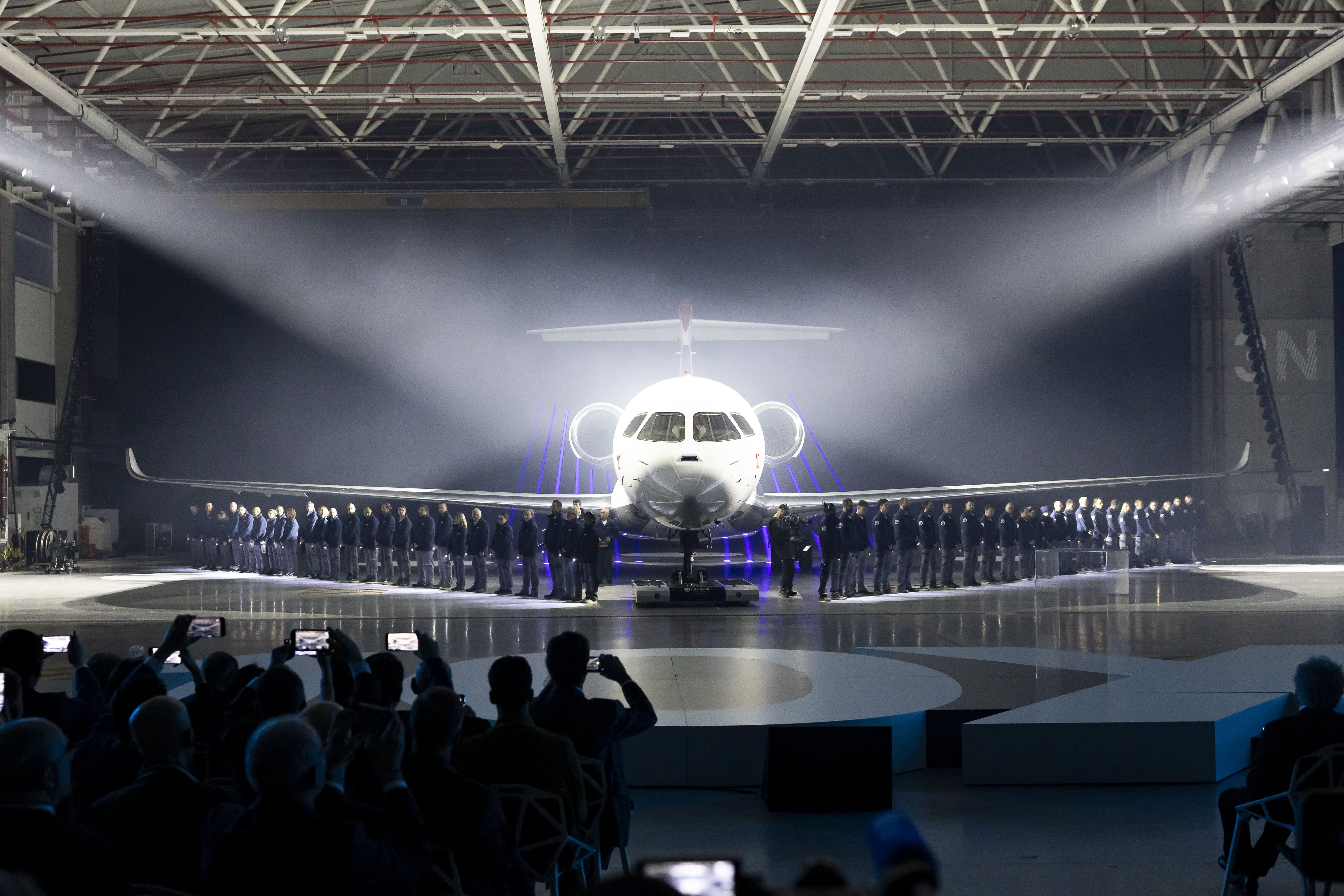
The message the evening of March 10 was that Dassault had upped the ante on comfort and technology when it comes to ultra-long-range jets. The 10X is a 100 percent new jet, developed to offer new capabilities to long-range travelers. It has the largest cabin of any purpose business jet, intended to make 15-hour flights not mere interludes between departure and destination, but a place where life carries on as at home or in the office.
By the numbers, the 10X cabin is eight inches wider than competitors and six inches taller. But, according to Dassault, that hardly conveys the very different experience the added space provides, nor the complexity of delivering this step change in capability.
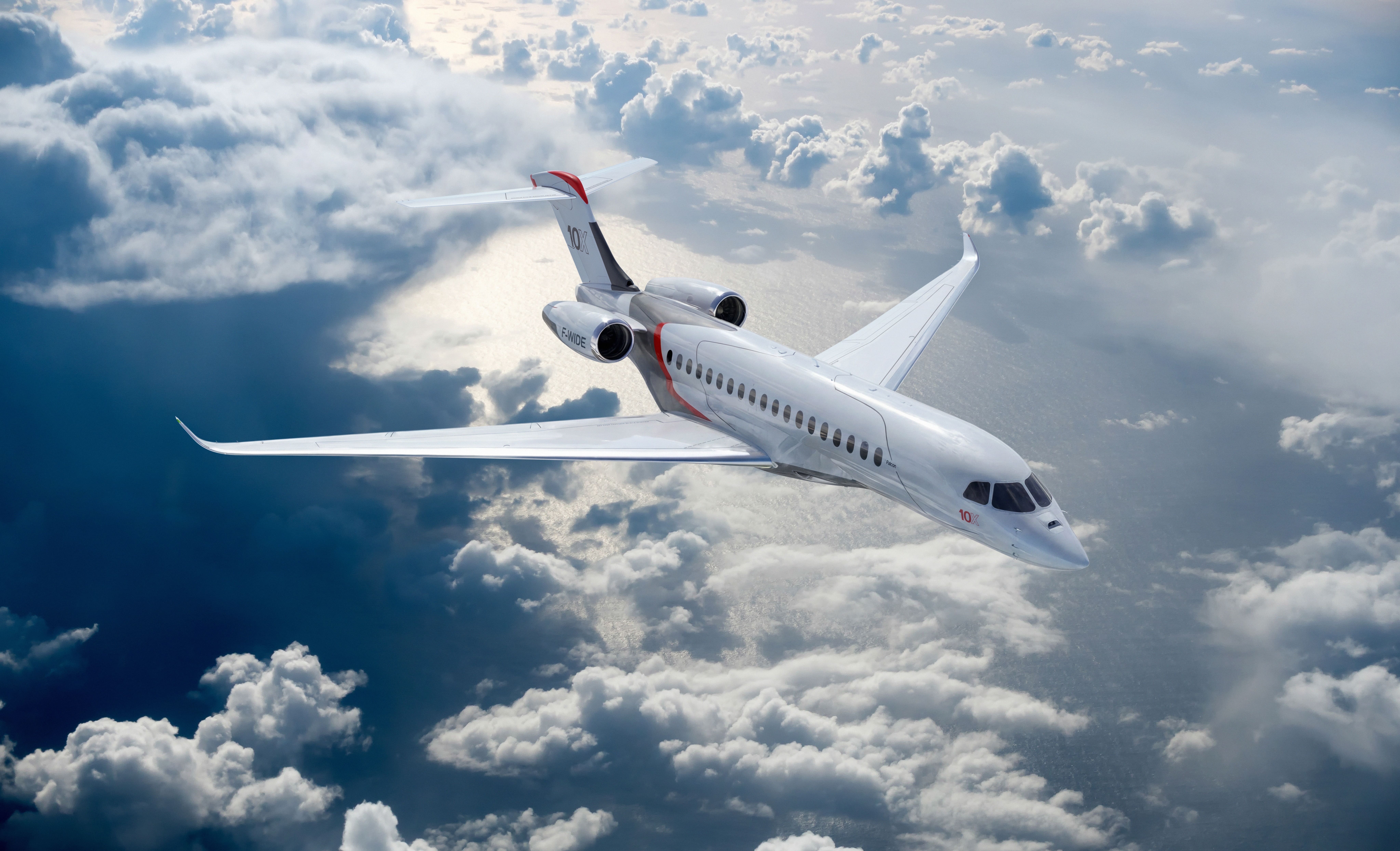
Dassault’s challenge was to design an aircraft that provides much more comfort without sacrificing speed or range. The 10X takes you places at Mach 0.925 and up to 7,500 nm. That is Hong Kong to New York nonstop capability.
“We could have flown farther but only with a smaller ‘me-too’ cabin, matching competitors,” according to Carlos Brana, EVP Civil Aviation. “That was not a satisfactory solution for us. As range and flight durations increase, what you really want is the most comfortable environment possible. You want to eliminate the perception you are trapped in a tube, no matter how well appointed.”
Here are the twin challenges with a bigger cabin: weight and drag. More structure generally equals more weight. A greater cabin diameter equates to more “wetted area” a source of friction drag as air flows around the fuselage.
An all-new and slippery fuselage design
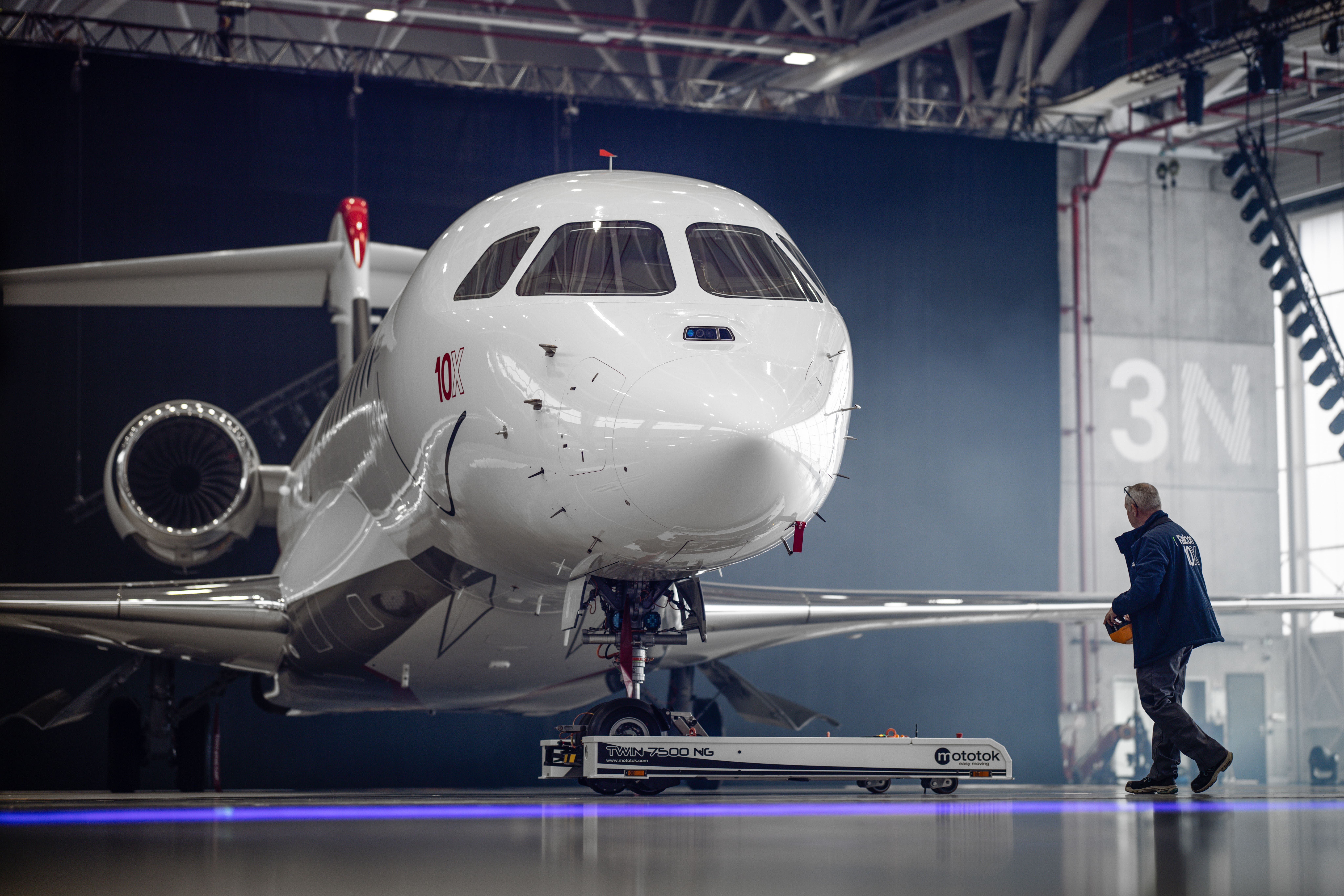
Starting with the fuselage, engineers crafted an innovative nose shape that promotes drag-reducing laminar flow all the way back to the cabin door.
Next, they abandoned the three engine layout that’s been a hallmark of top-line Falcon jets for half a century. The trijet configuration was ultra efficient for aircraft optimized for long-range cruise at .80 Mach, the standard cruise for a generation of business jets. But at higher speeds, computer models showed that fitting the aircraft with two turbofans, rather than three, would make it more slippery at speeds between .85 Mach to .925 Mach.
Business aviation’s first composite wing
Higher speeds required a new wing. It would be remarkably thin from top to bottom, plus it would have a high aspect ratio (the measure of length to width) to minimize induced drag, the drag created as a wing produces lift. At this size, the need for structural stiffness and strict weight limitations ruled out using aluminum. The only feasible alternative was carbon fiber wing construction, a first for business aviation.
The lighter weight composite wing (saving more than 900 pounds) would have a ripple effect on the rest of the aircraft, as the structural weight savings allowed the use of lighter weight landing gear, brakes and engines, among other components. And the lean wing weight was key to making the aircraft fuel efficient in spite of its size.
A third aerodynamic design breakthrough was the development of an intricately curved, wing-to-body fairing that harmonizes high-speed airflows from nose to tail.
The flexibility to make the 10X your own
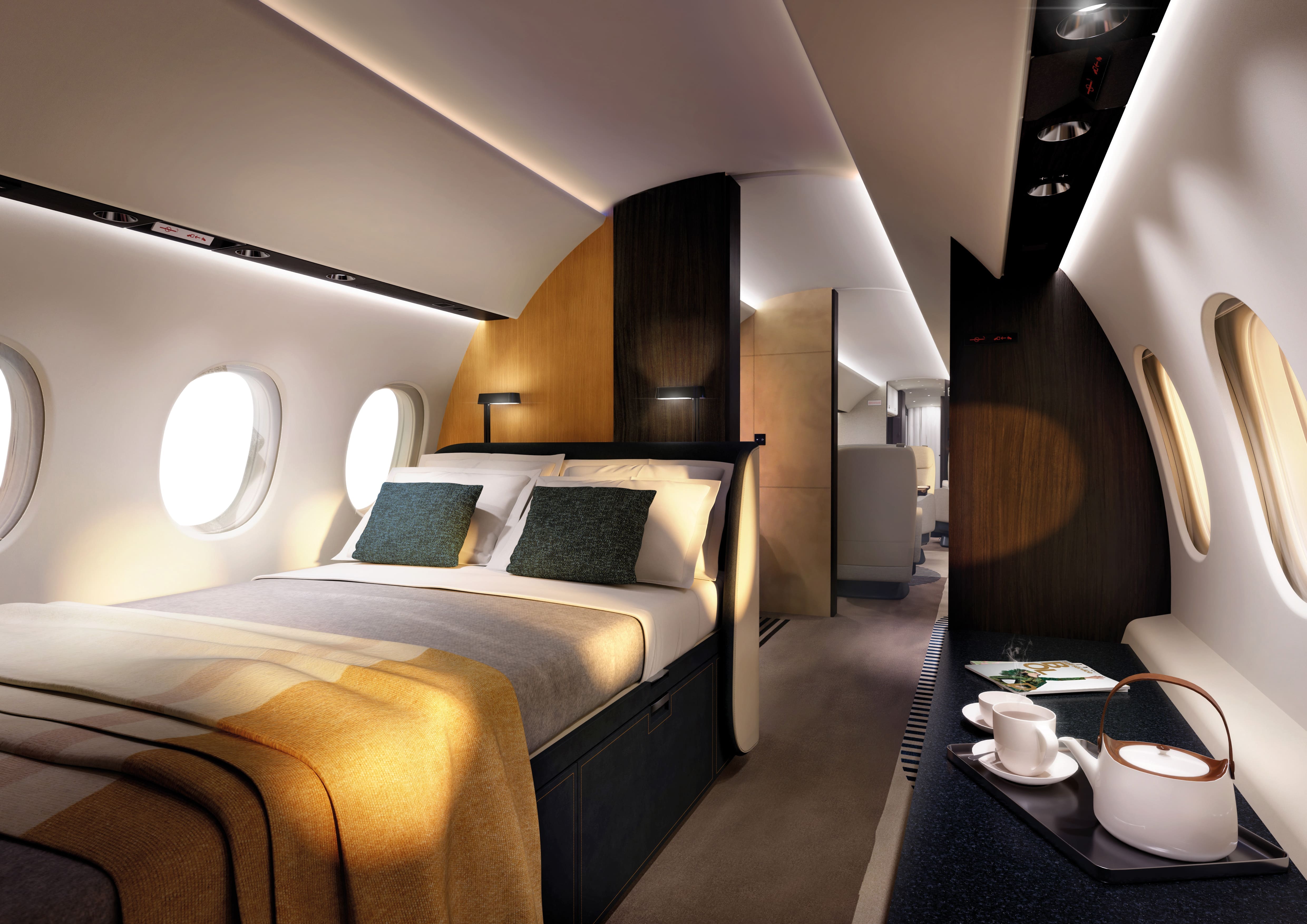
The first thing to know about the 10X cabin is the interior design flexibility, with dozens of possible floorplans. It’s generally designed for three or four cabin zones, but these need not be uniform. Some can be longer—for an extended aft cabin or dining area. Some can be small and intimate for a cozy home theater.
It’s the first long-range jet with a true 60-inch queen size bed (no corners cut off for access to the lav. If you opt for a longer stateroom, you can enjoy a true stand-up shower.
You can dine as if at home. No guests are crammed into a corner up against a sidewall, unable to exit the dining table. There is space between seats to allow individual entry and exit. The galley section includes a comfortable and legal crew rest area. You might not want to stop en-route to pick up a fresh crew, so a third crew member has this space to meet all requirements for the longest flights.
Years spent just thinking about comfort
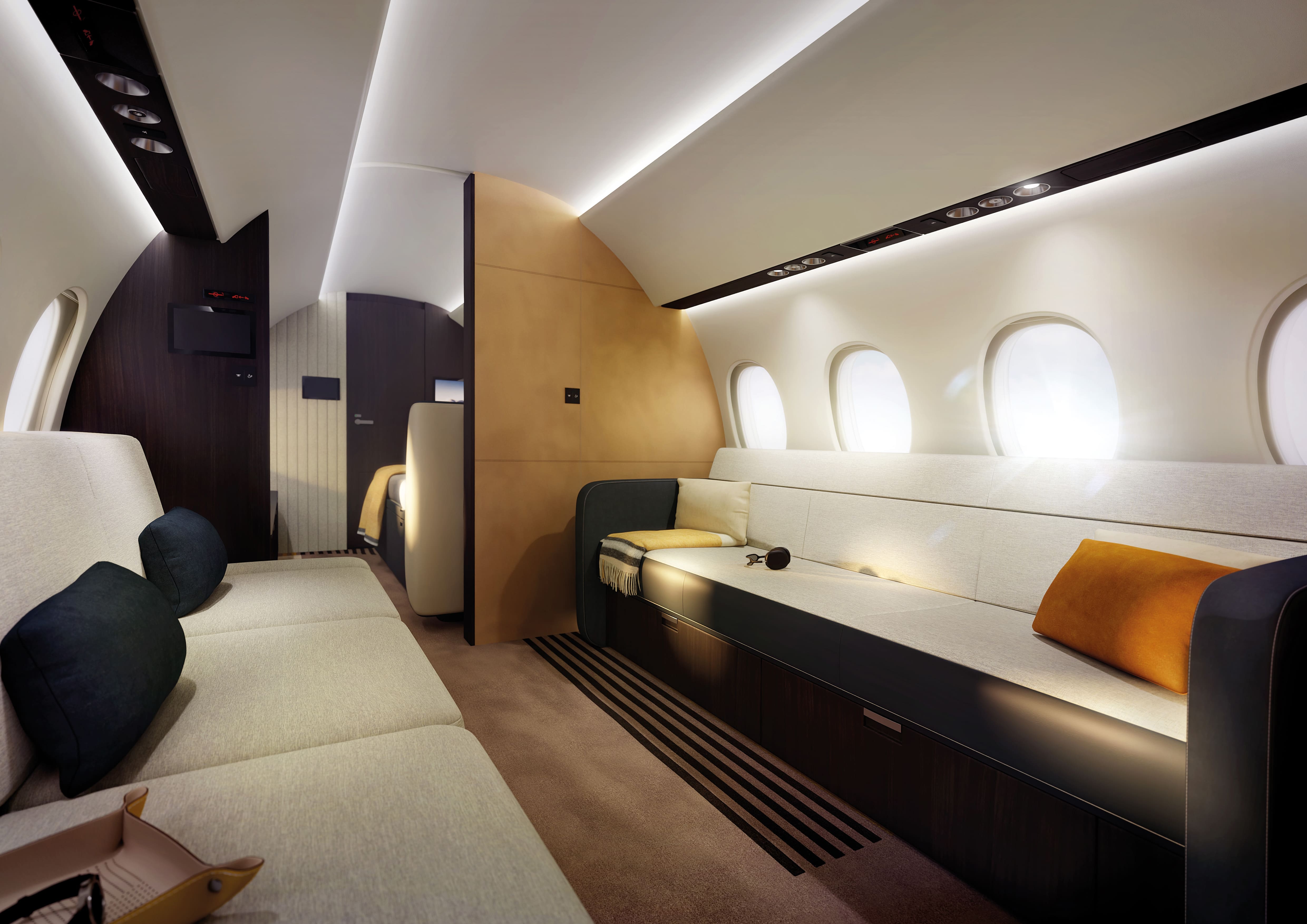
The seats are elegant rather than bulky. Armrests are thinner than you might see elsewhere. From an ergonomic standpoint, you’re more likely to rest your elbows on the part of the armrest closest to the seatback. You don’t need heavy space consuming armrests, as Dassault interior designers see it.
But you do need space. The forward club chairs are 22 inches, versus a standard 20-inch seat. With lots of aisle room left over. Each seat has its own swingout table. It’s easier to push your laptop or meal setting out of the way without inconvenience a passenger opposite you.
Windows are almost 50 percent larger than those on the Falcon 8X. Thirty-eight windows line the fuselage for the most window area and brightest cabin in business aviation.
Fighter philosophy in the front office
The 10X NeXus flight deck could well be the subject of another story. It incorporates new fighter-derived features: an advanced Head-Up Display for better situational awareness; a Smart Throttle—one lever controlling both engines; an automatic recover mode in the advent of spatial disorientation; a windshear escape mode; a soft go-around mode, which is easier for pilots and more comfortable for passengers.
The acronym for the fighter-inspired design is HOTAS: hands on throttle and stick. It’s the way fighter pilots maneuver—always eyes out, not down looking at internal flight displays and pushing buttons. It’s a safer way to fly.
Dassault CEO Eric Trappier calls the 10X “a game changer,” a much-used phrase. But in the world of high-end corporate travel, Dassault may have indeed changed the rules.

Engineering Wellness At 39,000 Feet
Next-Generation Propulsion: Electric & Hydrogen On The Horizon