


India’s Ranthambore National Park: Tigers, Conservation and Luxury Safari
India’s decades-long tiger conservation efforts have transformed Ranthambore into a safari destination replete with rich history and modern luxury.
By Lim Chee Wah

When it comes to wildlife safaris, India isn’t always the first destination that comes to mind. Yet intrepid travellers know it is one of the best places on the planet to spot tigers in their natural environment. Covering nearly 400 sq km in the state of Rajasthan, the sprawling Ranthambore National Park has long been a marquee attraction among the country’s 50-plus tiger reserves. After all, it is one of India’s original tiger sanctuaries, now boasting a thriving ecosystem that offers reliable sightings.
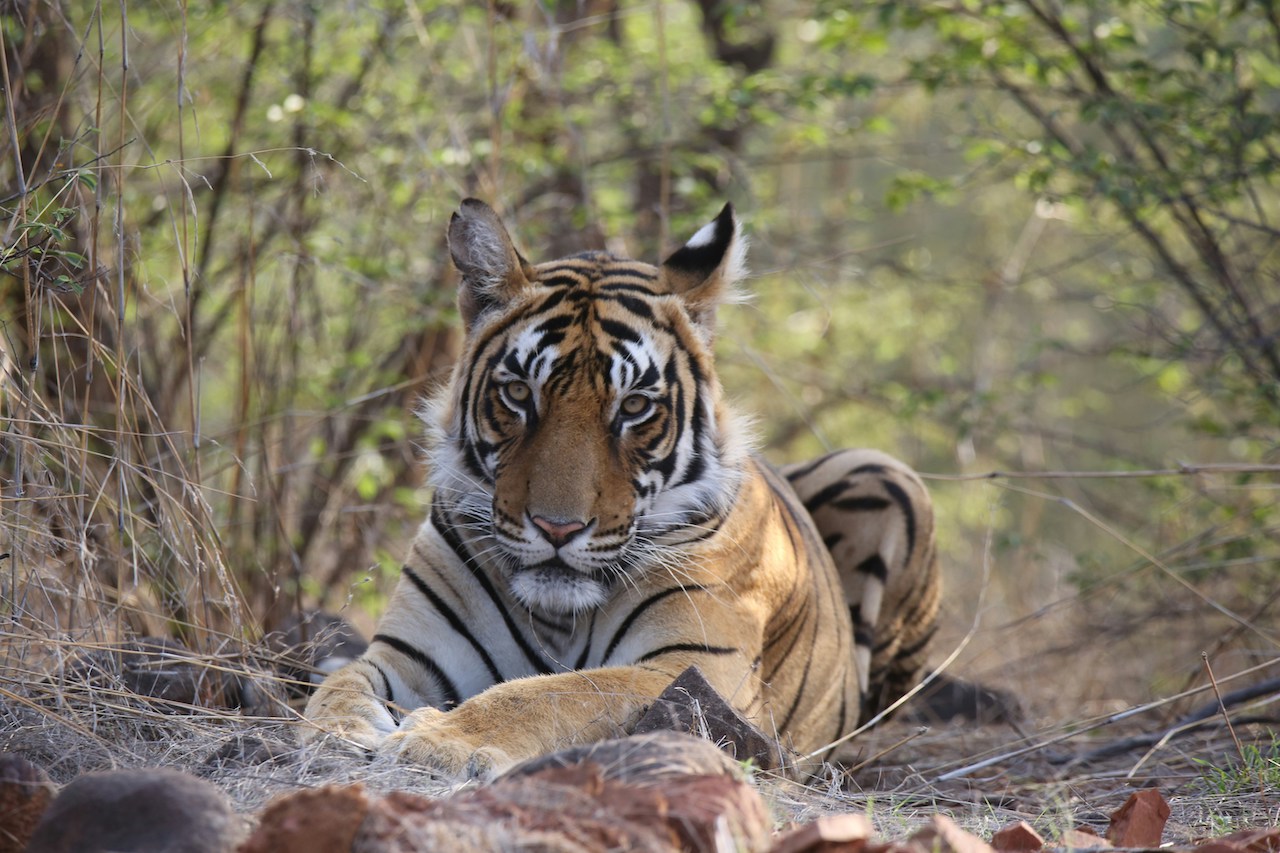
Tigers, specifically the Royal Bengal tiger, are a proud symbol of India. Yet the majestic big cat was designated as the country’s national animal only as recently as 1972. A year later, the nationwide Project Tiger was launched to protect and rebuild its dwindling population, so that the apex predator continues to thrive not only in Indian folklore and mythology but also in the wild.
It was a crucial intervention, because by the early 1970s, decades of rampant hunting, poaching and habitat loss had brought the Royal Bengal tiger perilously close to extinction. Now, more than 50 years on, India’s tiger recovery is widely studied as one of the world’s most inspiring wildlife conservation stories.
The Ranthambore success
While Ranthambore National Park is just part of the larger Ranthambore Tiger Reserve – which combines several other surrounding sanctuaries – it remains the reserve’s historic core. Sandwiched between the Aravalli and Vindhya ranges, the park’s dry deciduous forest in the flat lowlands is ideal tiger habitat.
However, the conservation efforts in the early days weren’t always smooth sailing. Despite the introduction of Project Tiger and Ranthambore National Park’s formal gazetting in 1980, poaching continued to persist. It wasn’t until the mid-2000s, with the enforcement of stricter laws following the near-collapse of India’s tiger population, that the park’s tiger numbers began to see a steady rise.

Today, Ranthambore National Park is home to a healthy population of nearly 60 adult tigers, an all-time high. What’s even more impressive is that Ranthambore now functions as a source reserve, with several of its tigers translocated to repopulate other national parks in India where local tigers had gone extinct.
That said, the park’s high tiger count isn’t the only reason why sightings here are so consistent. Ranthambore’s free-roaming tigers are mostly active during the day. On top of that, these big cats have grown accustomed to human presence, making them less shy and easier to observe, which is great for wildlife photography enthusiasts.
Tiger safari at Ranthambore opens from October through June before the park closes over monsoon. The hot summer months between April and June are the best times to spot the tigers as they linger near water bodies and shade.
It’s important to note that tiger safari at Ranthambore National Park is spread out across 10 zones. Each outing is confined only to one zone and the number of jeeps allowed into each zone is tightly regulated. So book early and aim for zones 2, 3 and 4: they offer higher chances of sighting due to the abundance of watering holes.
Luxury in the wild
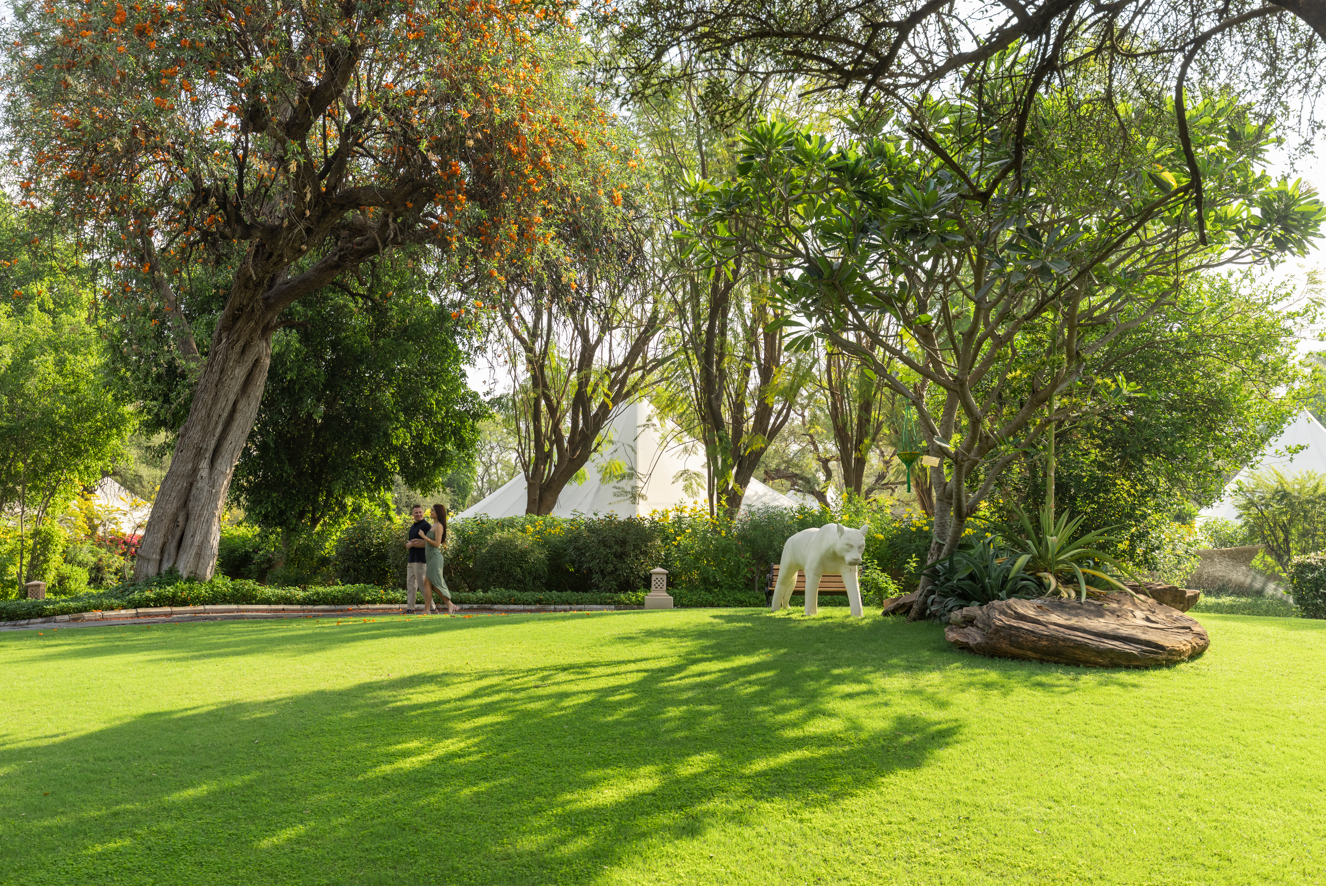
Sitting on the edge of Ranthambore National Park, The The Oberoi Vanyavilas Wildlife Resort is the perfect base to explore the wilderness in luxury. The expansive 20-acre property is lush, filled with manicured gardens, native flora and wandering peacocks, and yet it only holds 28 tents. This ensures that guests can be as territorial as the tigers in the park, with plenty of space and privacy to truly relax.
As a nod to the park’s bygone days as a private hunting ground of the maharajas, the spacious tents are inspired by exquisite royal caravans. Inside, king-sized four-poster beds, free-standing claw-footed baths and teak wood floors set the scene for utmost comfort while upholstery and rugs featuring tiger motifs anchor the resort firmly in its unique locale.

Such indulgence is especially welcome in peak summer, when the heat is punishing but tiger sightings are at their most frequent. After an awe-inspiring safari outing, you’ll have many retreats to bask in the afterglow of seeing the magnificent beasts in the wild: a private pool or outdoor deck at your tent, the pampering spa, or the resort’s main pool, styled like a palace courtyard.
Come evening, for an authentic safari camp experience, enjoy a sundowner by the bonfire amid the trees before heading to the restaurant’s open-air terrace for a meal, while being serenaded by live folk music. It’s easy to feel like Rajasthani royalty here at the sumptuous Oberoi Vanyavilas.

More than tigers
The tiger may be a compelling reason to visit Ranthambore, but it is not the only one. Even visitors who missed the enigmatic predator often come away spellbound by the abundance of wildlife here. The park is home to over 300 species of birds and a wide variety of animals including langurs, spotted deer, nilgai (Asia’s largest antelope) and sambar, the tiger’s favourite meal.
For a change of scenery, make a trip to the spectacular 10th-century Ranthambore Fort. The Unesco World Heritage Site, perched on a hilltop in the middle of Ranthambore National Park, stands as a reminder of the Rajputs and Mughals who ruled hundreds of years ago, along with the tigers. While the maharajas are now gone, the tigers have made a triumphant return, and they are occasionally spotted resting near the ruins, as if to reclaim their land. And it’s only right that Ranthambore continues to protect this modern-day Bengal royalty for posterity.

The Ritz-Carlton Maldives, Fari Islands Safeguards The Deep Blue